A sensor placement problem across an entire municipality. Rainfall, humidity, road density, building type, elevation, all feeding into a single suitability score. Then the constraints that had nothing to do with math: you can't put a sensor on a road, and you can't put one in a cemetery. It's the kind of problem that sounds built for a quantum computer. The best answer in the room came from a classical machine.
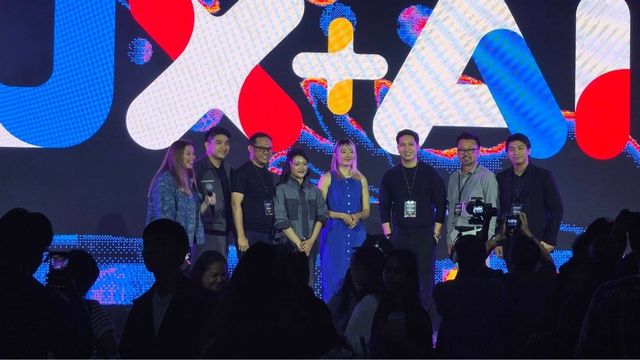
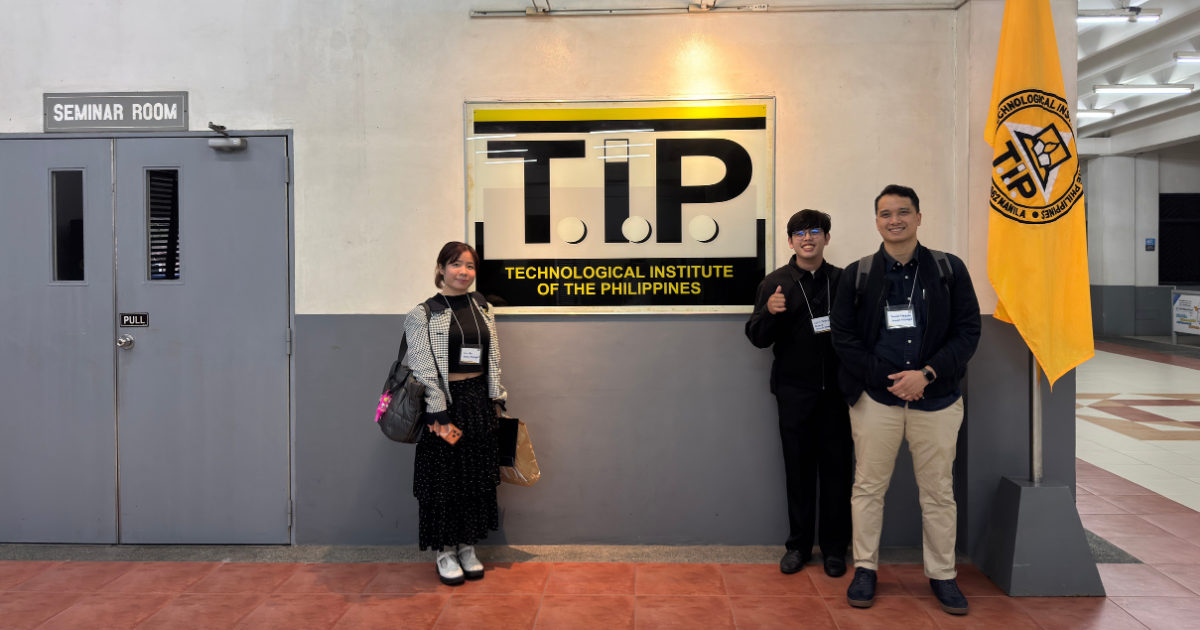
Three of our team from Human Managed, David Medallo, Ira Go, and Cedric Rivera, spent a day at the 1st R&D Workshop on Quantum Computing for Intelligent Power and Energy Systems, hosted by QISLaP at the Technological Institute of the Philippines. The event brought together researchers, government agencies, and industry teams working through what quantum computing can actually do for the energy sector, and what it still can't.
Formulate first, ask about quantum later
Dylan Josh Lopez opened with a toolchain that takes a business problem, turns it into a mathematical formulation, and runs it on either a classical machine or a quantum one. His sensor placement demo was the example above. He showed the optimized map, then pointed out that the run behind it never touched a quantum computer. It was just the math, solved classically.
His advice was straightforward: simulate the formulation classically first. If a classical solver gets you the same answer, the problem was never the hardware. It was the formulation.
He also walked through penalty weights, the way constraints get built into these models. Rules like "no sensor on a road" aren't hard-coded; they're enforced as penalties. Set those penalties too high, he said, and the model starts optimizing for the rules instead of the actual objective. Too much policy ends up clouding the outcome you were trying to solve for.
That's a failure mode we recognize. Tune a detection rule tight enough and it stops finding anything real, it just satisfies itself. Where a piece of logic runs, in a fixed rule, a model, or a pipeline stage, is a decision you make case by case. The simpler execution is sometimes the more accurate one. There's no version of that answer that holds every time, which is more or less what Dylan was saying about classical versus quantum in the first place.
The hardware gap is still wide
Quantum has real strengths, just not everywhere yet. On grid scheduling at scale, Dylan's hybrid methods held steady in cases where the classical approach blew up in iteration count, but only once the formulation was sorted out. Running that same problem at full grid size would need roughly 35,000 qubits, the basic unit a quantum machine computes with. The machines available today handle about 438.
Cedric's takeaway filled in why that gap matters at the physics level. Classical machine learning runs on bits, plain 0s and 1s. Quantum machine learning runs on qubits, which hold both 0 and 1 at once through superposition, and can become entangled so that measuring one tells you something about another instantly, even at a distance. That's what gives quantum systems room to explore many possibilities in parallel, useful for problems like weather forecasting and energy grid planning specifically because those problems have that many possibilities to explore.
Building the qubits themselves splits into two approaches with different trade-offs. Superconducting qubits need cooling colder than deep space just to keep heat from disturbing them. Photonic quantum computers use particles of light instead, skipping the extreme cooling, but making individual photons harder to control reliably. Neither is a solved problem yet.
Where quantum earns its place, and where it doesn't
The rest of the day held to that same reality. Jabez Lopez presented EV charging placement work where the classical solver was still faster at the sizes they're currently working with. Jann Enrique Moreno and Gerard Francesco Apolinario presented grid scheduling where the quantum piece only carries the part of the problem suited to it, with results still pending. Nobody in the room projected savings they couldn't back up yet.
That restraint stands out on its own. It would have been easy to oversell early results at a workshop like this. Instead, the researchers were honest about what's proven, what's promising, and what's still a few years of hardware progress away.
The dependency that doesn't go away
Across nearly every presentation, one thing stayed constant regardless of whether the approach was classical, hybrid, or quantum: the outcome depended on data quality, domain expertise, and how well the problem was framed before anyone touched a solver. Weather forecasting, demand forecasting, EV infrastructure planning, grid optimization, all of it needed historical datasets, operational measurements, geospatial information, and people who understood the domain well enough to build the model correctly in the first place.
That's the part of quantum computing's future that doesn't depend on physics catching up. Better qubits will matter eventually. Better data and a clearer formulation of the actual problem matter now, and will keep mattering after the hardware improves.
Salamat to the QISLaP team and the workshop organizers for putting this together, and for building the first lab in the country set up specifically for quantum computing in energy, under the Q-RIEnTe project with DOST-PCIEERD funding. For a technology this early, the most useful thing anyone in the room did was tell the truth about where it stands.