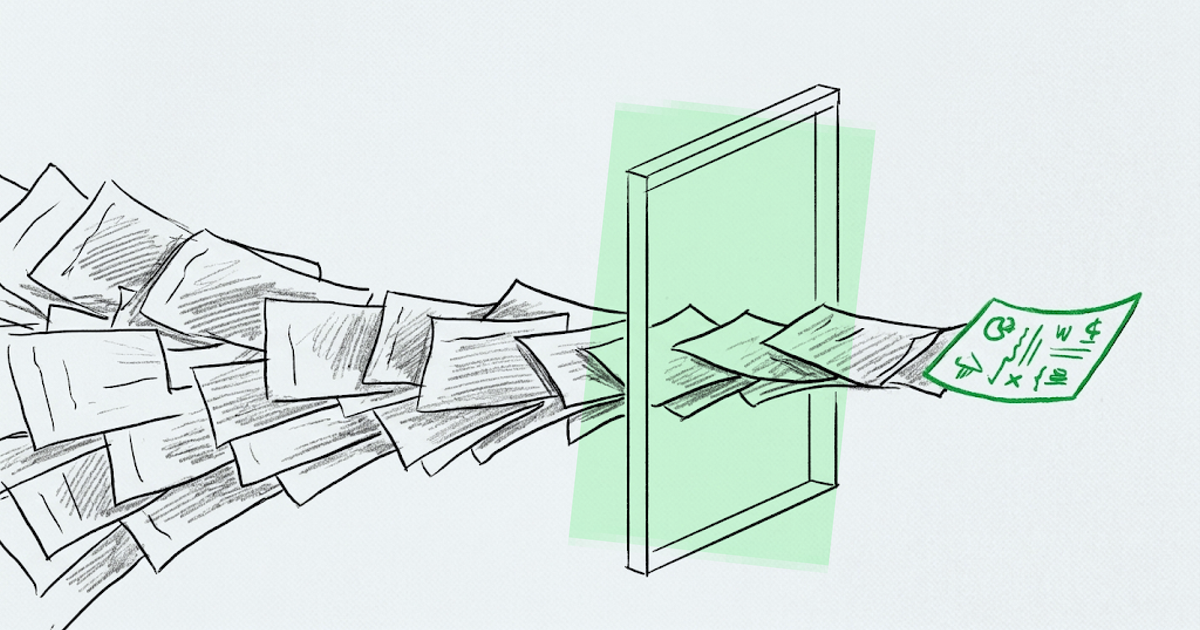
Since the rise of popularity of AI, every new feature came with a fresh round of posts calling it the end of designers. The conference did not shy away from the designer anxiety, and instead charged right to it.
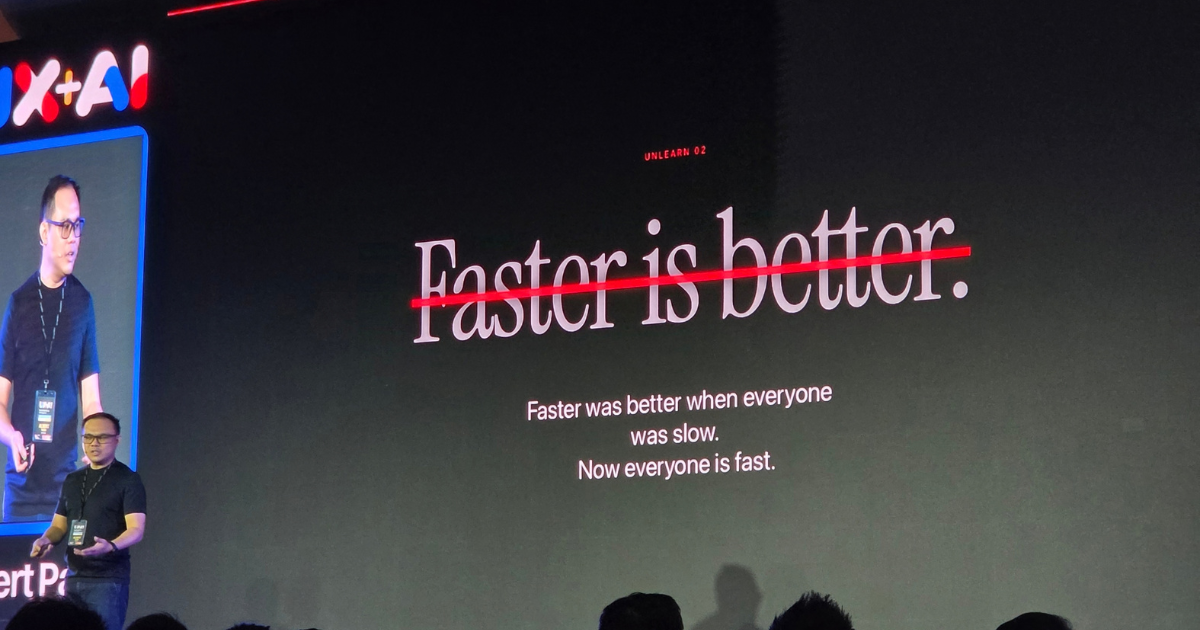
Yes, anyone can design now. Anyone can ship an app too. But being able to make things fast is not all there is to it.
"Designers are now much more needed more than ever because you are the ones who will decide what our future will look like." — Albert Padin
Pia Besmonte of Swarm asked a question I fell like people across industries can relate to: what do we do when the thing we love most feels commodified? AI made craft cheap. That leaves us the work of saying what good means.
Judgment and Taste Matter
Every speaker had their own version of this. Execution is cheap, so the ability to evaluate becomes scarce.
"Judgment is something that you build from, as a beginner, from making mistakes." — Pia Besmonte
As the only designer on my team, my days used to feel a bottleneck for design. Presentations, event collateral, one-off requests, all piling up, and waiting on me to confirm it was on brand or as close to polished as the deadline allowed. So when Human Managed made AI tools available to everyone, my frustration changed. The outputs came fast and so far removed from the brand guidelines it sometimes looked like slop.
Everyone is one Slack message away, but we work across cities and time zones, and we, out of habit, often lock in hard when a project is exciting and the deadline is tight. Under those conditions, visual standards are first to slip. Anyone can generate anything with their agent of choice, but everyone can ensure that the outputs hold a certain aesthetic standard.
I Stopped Being the Gate
As the designer working on brand governance, the point is never control. As a UX practitioner, I don't want visual standards to slow the technical teams down. So I wrote a brand constitution, and later a brand alignment skill on top of it to empower teammates to generate a landing page, a diagram, or a deck and stay close to the brand without worrying about "is it on brand?", or adding a review cycle to mine.
Jason Chan, who built Poe at Quora, talked about how a design system used to be the thing teams deferred until there was budget for a specialist. But having AI removes that option, because the design system is now the foundation of every piece of UI a model produces for you. On Poe it became the guardrail for the whole product, whether the work started with a designer, a product manager, or an engineer. He was also clear that you do not need the full-scale version to start. Documentation and scaffolding count. Our brand constitution turned out to be exactly that, and it is now part of the foundation for our design system.
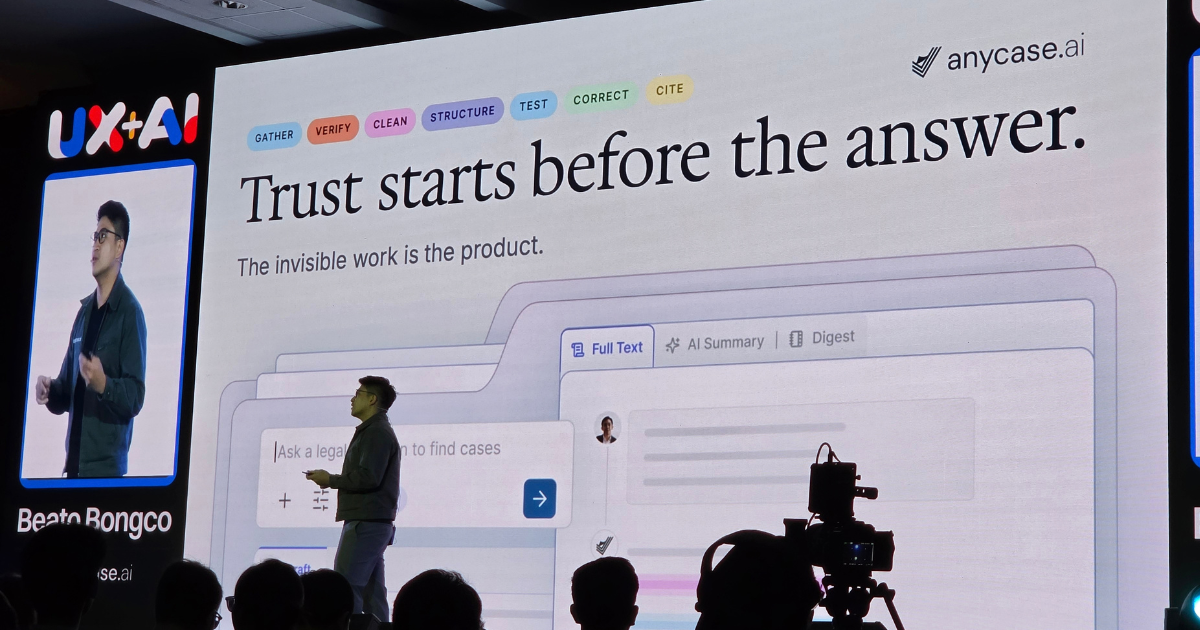
Beato Bongco of Anycase AI talked about it from the data side. Although he is not a designer, he advocated for putting the domain experts at the center. A model is only as good as the data it was trained on, he said. Garbage in, garbage out. His correction loop puts lawyers, not engineers, in the middle of every fix.
"You should put domain experts in the center." — Beato Bongco
Xinni Chng of Google shared the data on design job listings that are down roughly seventy percent from their 2022 peak, below where they sat in 2018. And the listings skew senior: fifty-six percent of hiring managers report rising demand for senior hires, against twenty-five percent hiring junior. One reason is that AI automated the production layer, where junior designers used to live.
As a designer, I consider brand and design decisions my domain. Design is something that I have been doing straight out of college in different disciplines that shaped judgment that is entirely my own. Those years gave me taste, but they also gave me working habits and a perspective of approaching different problems. Knowing when to think about a single application, when to think about the surface, and when to think about scale is not something I just read on a blog or watched in a video. I got to live it and get it wrong enough times to learn it, and I had the privilege of working with people around me who helped me figure why it was wrong and ways to get it right.
Some things are only learnable by experience. If juniors are robbed of the chance to build that judgment and land in senior roles without the foundation that experience and mentorship provide, what happens then?
Lore Cannot Be Replicated by the Remix Machine
Remix is essentially what AI does. Besmonte reached for Roland Barthes to explain it, the idea of the author as a remix machine of everything they have learned and experienced, and then asked what happens when the remixing gets delegated to something that is not human. Bongco described the output of that machine as the middle of the bell curve. Nothing wild comes out.
Human experience is the thing that shapes judgment and taste. Our hobbies, our upbringing, the culture we sit inside, all of it changes how we put things together. The panel on Human Experience in the Age of AI articulated it well.
"AI can't be intertextual. Be interdisciplinary. AI cannot replicate how humans can pull context and ideas from different influences."
That reminded me of a conversation in the office a while back. A coworker connected the project he was working on to worldbuilding and Magic: The Gathering, and I remember thinking about how cool it was that our hobbies were enriching the work. The subcultures we join and the people we sit next to daily can influence how we approach a design problem.
"Design has always been about understanding the cultural context behind the user that you are designing for. When you use a Filipino product made by a Filipino designer, you feel pride and belonging and connection. If the person behind it made it with true understanding of you, you'll feel better engaged with the app." — Xinni Chng
AI delivers the median. Designers can push past it, using the depth of context each of us carries. That curiosity, and that understanding of a specific user, is not something a machine has.
Design Roles Won't Disappear, but They Will Be Different
The conference opened by acknowledging the anxiety and closed with a clearer view of what is possible. I won’t lie. The anxiety about being a designer in tech at times have been crippling. If everyone can produce it, and the slop is good enough for leadership, what happens to designers who spent years on the craft? How do we advocate for the the user, and designers coming up behind us if we are not valued enough to be in the room?
"Designers and researchers are the most worried people in tech. A lot of people feel overwhelmed by the pace of change." — Pia Besmonte
There is a number that should worry the people making decisions. Of sixty-six organizations hiring for new AI roles, only seven were hiring UX designers. Designers are largely absent from the conversations and the decisions that shape how AI gets adopted in Philippine organizations.
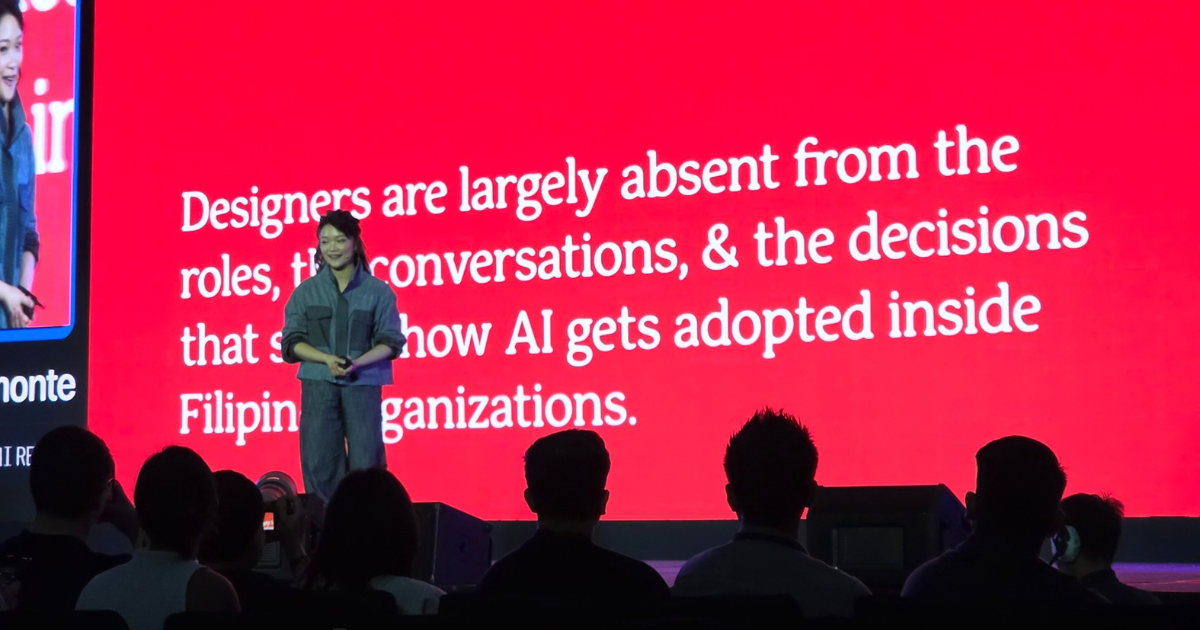
Everyone now holds the same tools. An engineer, a marketer, and a founder can produce the same artifact a designer can, and for a lot of decision makers who are consuming or prototyping, the slop is enough. Reaching people first has been beating meeting a standard. Who is going to advocate for the user if the designers are not there?
The same shared access that pushed designers out of those rooms is also changing how the role works. Chng brought up Jenny Wen of Claude CoWork, who has argued that the design process we were trained in is dead. While controversial at the time it came out, she's not wrong. When I joined Human Managed in 2021, most of my work lived in Figma and my day started by opening it. Today my shift starts in Cursor, and prototypes that used to be static screenshots are interactive HTML files.
"The designers that are thriving today aren't the most technically savvy or the most experienced. They're the ones that are willing to pick up the tool, go build something... build something that doesn't work, and then try again, build something that ultimately works." — Jason Chan
Technical skill, or the lack of it, is not what stops you now. Curiosity and a willingness to experiment are what will keep you in the industry. New roles are being defined as I write this, and jobs that used to belong to two or more people and now sit with one. Dan Cariño described his own move into an AI-forward role at OpenAI as design's third medium shift, after the web and the smartphone.
"Even though you might have the title of a product designer or interaction designer or UX designer, there are new requirements... it's actually really advantageous to jump onto this medium early because then you have the opportunity to develop experience." — Dan Cariño
While no single tool is going to replace designers, that doesn't mean we are guaranteed a seat. The work that is left is the work that cannot be generated. A written standard the whole team can reach. Judgment built over years of being wrong in front of people who explained why. And the context each of us brings in from outside the job. Adapting early is what decides whether we get to define the next version of this role or inherit someone else's. Albert closed his talk by telling the room that our future is now in your imagination. The future still feels uncertain, sure, but the gap between the idea in your head and the thing you can ship is smaller than ever, so go build it. The limit does not exist.'