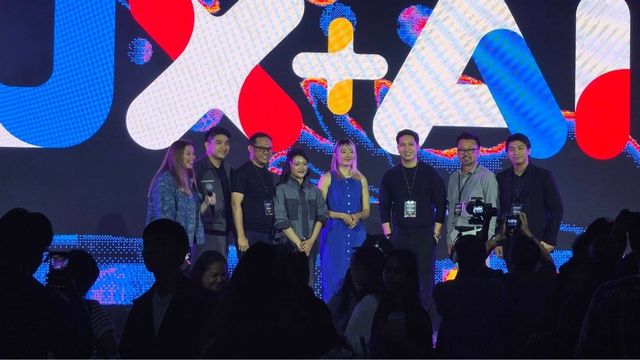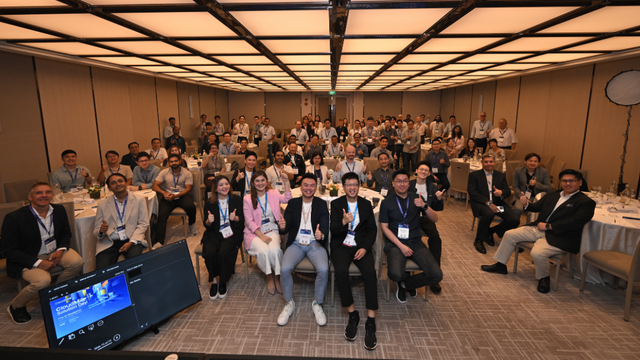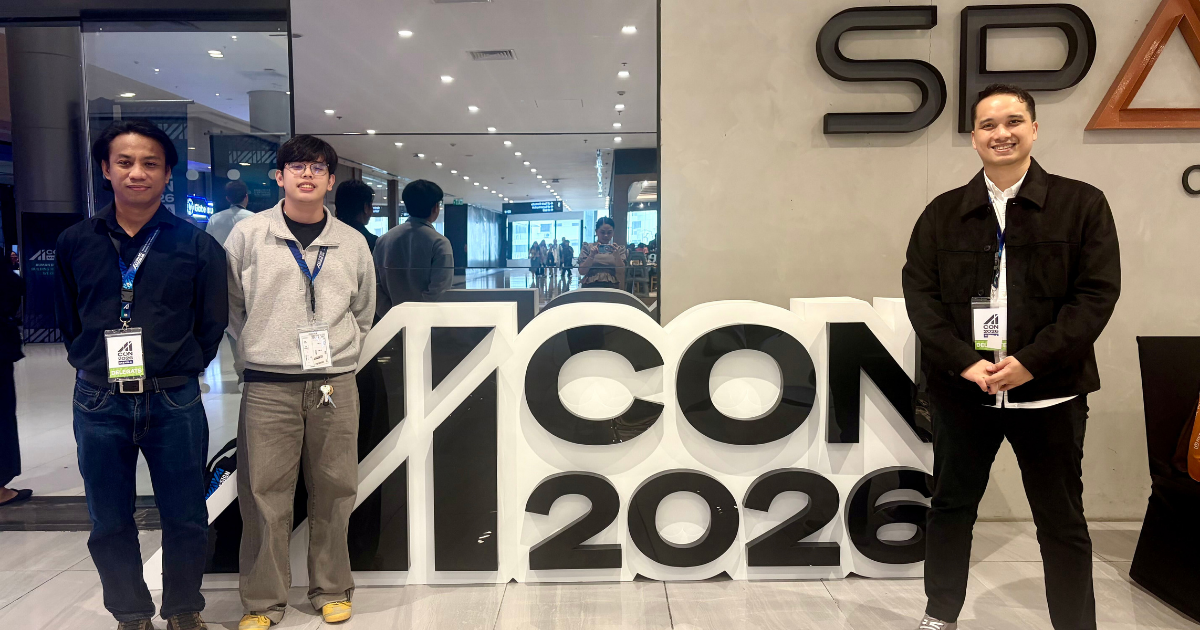
Francis, Cedric, and David spent August 25 at AICon Manila 2026, the Analytics and AI Association of the Philippines' eleventh edition, held at SPACE at One Ayala in Makati under the theme "Human by Design: Building the AI Future We Choose."
The moment that stuck came out of a panel Michelle Alarcon moderated. Someone in the audience asked the question every organization trying to adopt AI eventually runs into: how do you actually redesign roles around it? Aurelien Chu, co-founder and CEO of Eskwelabs, gave an answer that skipped the AI part entirely. Redesigning a role, he said, is two older disciplines stacked on top of each other. Break the work into duties, actions, and tasks. Then map what data each step actually needs.
Nothing new. Nothing shiny.
The model was never the hard part
That answer matches what David, who shared this with the rest of the team, sees in Human Managed's own work every day. The hard part of AI work is almost never the model. It's knowing the operation well enough to say, precisely, what the system should do at each step. And it's having the data underneath to prove it actually did that.
Most organizations experimenting with AI start from the model and work backwards, hoping the operational clarity shows up later. Aurelien's framing runs the other direction: duties, actions, tasks, data. The model is the last thing you add, not the first thing you reach for.
Where the effort actually goes
Most of the effort in AI work sits upstream of the AI layer itself, in the unglamorous job of understanding an operation clearly enough to describe it in steps, and building the data foundation to back each step up. That's been true for Human Managed from the start. It's the same reasoning behind the I.D.E.A. framework we build around: intelligence has to come from real operational data before any decision, execution, or action can be trusted.
It's a good sign when a conference stage confirms an approach rather than complicating it. AICon Manila didn't hand the team a new answer. It handed them a clean, well-argued version of the one they already had.
One size doesn't fit all
Francis came back with a different, equally practical observation: AI policy and implementation have to be built around local culture, not imported wholesale. A governance model or workflow standard designed for how teams operate in the West doesn't automatically translate to how teams here actually work, and treating it as if it does is how well-intentioned AI programs stall.
The friction is fear, not technology
Francis's second point cuts closer to why AI adoption stalls inside organizations in the first place. The resistance usually traces back to fear: training the very system that might replace the person doing the training. Getting past that is a matter of people changing how they work day to day. Francis pointed to a concrete example: watching how non-technical managers use AI to get better at their own jobs, rather than treating it as something only the technical team touches.
What this means for us
The organizations that get AI adoption right won't be the ones with the newest model. They'll be the ones that did the unglamorous work first: breaking the operation down into duties, actions, and tasks, building policy around how their own people and culture actually function, and helping the humans in the system change how they work instead of fearing what the system will do to them. That's the order Human Managed has always worked in, and AICon Manila is one more reason not to change it.