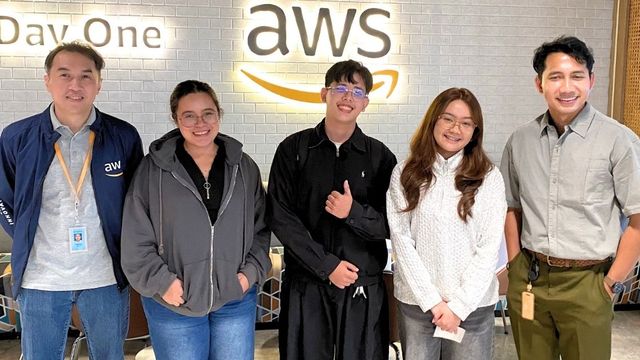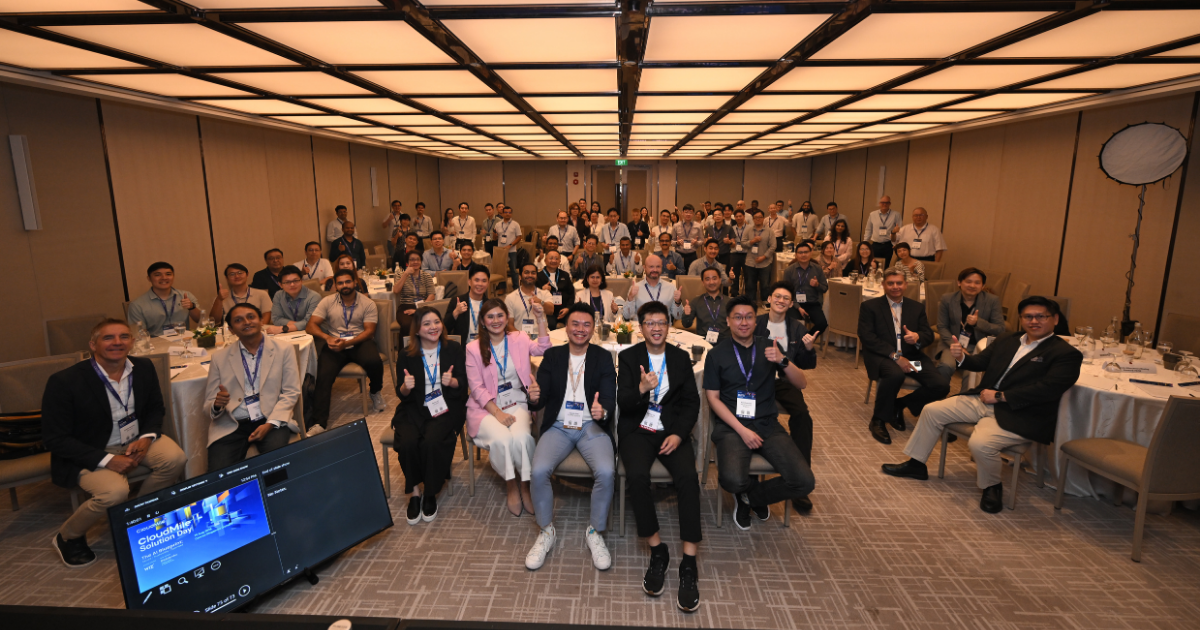
Two of our team, Justin and Weixiong, spent the morning of August 19 at CloudMile Solution Day 2026, held at Conrad Singapore Orchard. The event, hosted by CloudMile Singapore with AWS, Dataiku, and Bitdefender as partners, was built around a specific tension: how enterprises scale AI innovation while still meeting Singapore's compliance expectations.
A lot of the day was spent on AI governance and guardrails. That's the right conversation for the room to be having. It's also, per Justin and Weixiong's read, largely a conversation Human Managed has already had internally, or is actively working through. What stood out was where the room's thinking stopped, and where it still needed to go.
Governance talk is catching up. Accountability is still open.
Weixiong's clearest takeaway was about the gap underneath the guardrails conversation: who is actually accountable when an AI system makes a decision, and what happens when the context it's working from starts to drift.
That second part matters more than it sounds. A model doesn't need to be wrong to cause a problem. It just needs to be reasoning from information that's gone stale, or incomplete, without anyone flagging that the ground has shifted. Left unmonitored, that drift is how a system keeps producing confident answers that no longer match reality.
Weixiong's other observation ties directly into that: technology is available to everyone now. What differentiates how it gets used is the mission behind it, and whether the organization can keep every team's AI usage inside the same enterprise-level, auditable standard, rather than everyone building their own version of "close enough."
Adoption is a culture problem before it's a tooling problem
Justin's most useful thread came from a session on getting internal tools actually adopted inside an organization. The lesson Justin took from it: authorized enterprise AI has to be good enough, and easy enough, that people choose it over whatever unauthorized personal tool they'd otherwise reach for. Policy alone doesn't win that competition.
That connects to something Justin flagged as worth building internally: a short, informal sharing session where Human Managed's own build team walks through how they're already using AI day to day, workflows and shortcuts included. The team has real, lived experience here. Surfacing it could help the rest of the company align on a shared answer to a question that matters more than any policy document: not "are you allowed to use AI," but "don't outsource your brain to it."
One smaller detail from the day is worth sitting with too: a session from the Republic of Singapore Air Force's RAiD initiative described setting aside 10% of working hours specifically for learning, not necessarily tied to the job, on the belief that the skill of learning itself, and the ideas it surfaces, pay off even when the topic doesn't look relevant at first. It's a useful reminder that AI-literate teams don't get built by mandate alone.
A conversation worth following up
Justin and Weixiong also made a promising connection with another attendee at the event, who was keen to learn more about what Human Managed does after a conversation at the table. That's the kind of connection these events are actually for, and one worth a proper follow-up.
What this means for us
Most of what CloudMile Solution Day covered on governance and guardrails confirmed a direction we're already moving in, rather than changing it. The open question worth carrying forward is less about the policy layer and more about the operational one: who owns an AI decision when something drifts, and how do you make the authorized way of working with AI the easiest one to choose. That's the harder problem, and the more useful one to keep solving.