If you lead a team, run a business, or manage anything with moving parts, you already know this feeling. There are five things on the table. Three of them are urgent. Two of them conflict. And by the time you've gathered enough information to feel confident, the window has moved.
This is the reality of decision-making today. Information is everywhere — alerts, dashboards, notifications, channels — and it's not slowing down. Google estimates that AI capabilities are doubling every six months. That's three times faster than Moore's Law. The world doesn't wait for your analysis to finish.
Speed matters more than precision.
That doesn't mean being reckless. It means accepting that a good-enough decision made quickly is almost always better than a perfect decision made too late. The goal isn't to be right every time. It's to move fast, learn fast, and shrink the cost of being wrong.
Picture a chart. Good decision up, bad decision down. The line zigzags — but it moves forward, and the dips get shorter each time. That's what healthy decision-making actually looks like. Not a straight line. A tightening loop.
Not all decisions deserve the same weight.
One of the most practical frameworks we've come across is dividing decisions into two buckets: fixed and fluid. Fixed decisions are hard to reverse — platform architecture, strategic partnerships, key hires. These deserve deep deliberation and scenario planning. But they're rare. Most of your day isn't spent there.
Fluid decisions are everything else. What to prioritize this week. Which problem to tackle first. Where to shift resources when something changes. These should be made quickly, tested, and adjusted. Getting attached to them is a trap. Protecting time already spent on a suboptimal path doesn't make the path better — it just makes the loss bigger.
Failing fast is only half the equation.
"Fail fast" has become a startup cliche, and for good reason — it's incomplete. Failing fast without course-correcting is just failing. The value isn't in the speed of the failure. It's in what happens next: the immediate reassessment, the adjustment, the next iteration. Do, course-correct, do again. That's the cycle. And the more reps you get, the sharper your instincts become.
This applies whether you're running a five-person startup or a security operations center processing billions of events. The decisions change. The principle doesn't.
Maybe the question isn't "How do I make better decisions?" but "How do I make decisions faster — and get better at recovering when they're wrong?"
Because in a world that moves this fast, the ability to adapt beats the ability to predict. Every time.
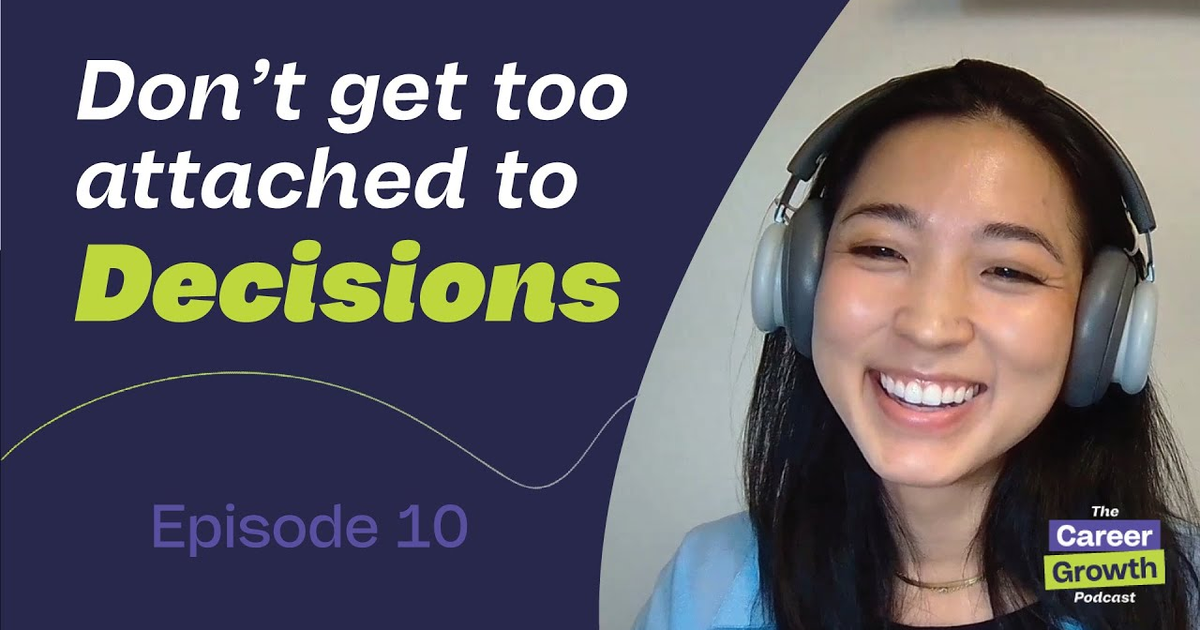
Hear more from our CEO Karen Kim on leadership, decision-making, and building in uncertainty on the Career Growth Podcast.