Seven talks, one Sunday, and almost every speaker landed in the same place by a different road. Making the thing is not the hard part anymore. Deciding whether it should exist, and whether it is any good, is.
We sent Henri to UX+AI at SMX Convention Center in Pasay City on September 6, 2026. The seventh edition of Asia's largest UX conference ran under the theme human experiences in the age of AI, and the argument playing out on stage is the one we have been having in security and risk operations for years. Once a machine can produce the work at volume, who decides what is worth acting on? The speakers were designers, developers, and founders rather than analysts, but the shape of the problem was identical.
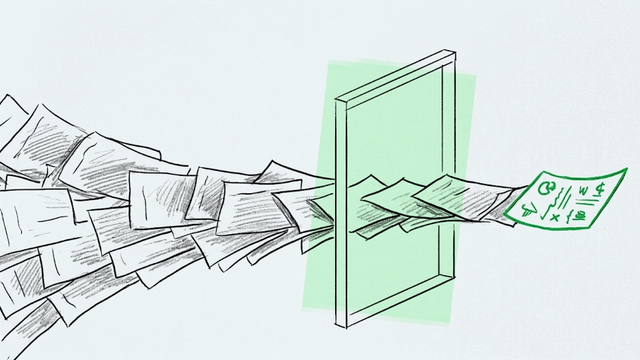
Creation accelerated. Review stayed exactly as slow as it was.
Albert Padin, who leads design at mWell and co-founded the startup studio Symph, opened with a number that sounds like a win. Two years ago he told a team of around 80 people at Symph to build 30 AI apps in 30 days. Nothing shipped on day one. Nothing on day two. One app on day three. By day five someone had built an AI app that builds AI apps, and by day 30 the count was 1,200.
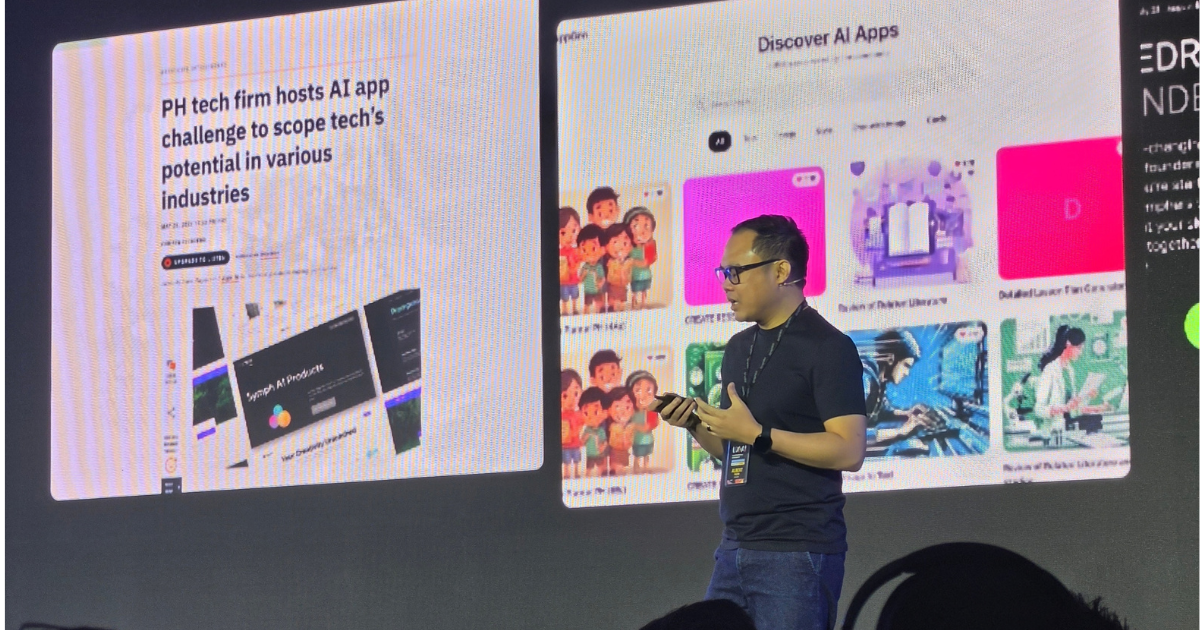
Then he asked whether any of them were good, and answered his own question with a shrug.
His lesson was that AI made creation cheap but did not make judgment cheap. The people who apply taste and standards are the same people, working at the same speed, now facing many times the volume. His advice to anyone rolling AI out across a team was to stop accelerating the makers, who will accelerate themselves, and start accelerating the reviewers.
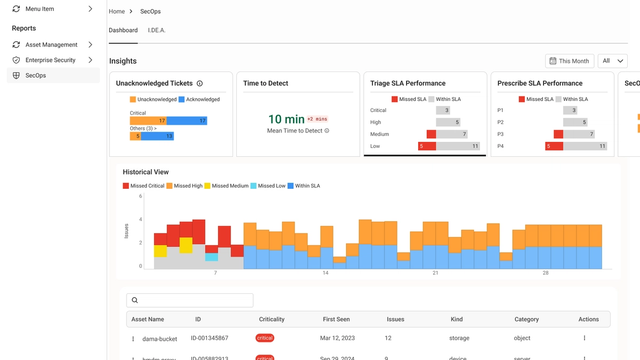
That one landed close to home. When alert volume rises, the constraint moves to whoever owns the decision. Adding more production capacity on the other side of that constraint does not help.
Designers are not in the rooms where AI decisions get made
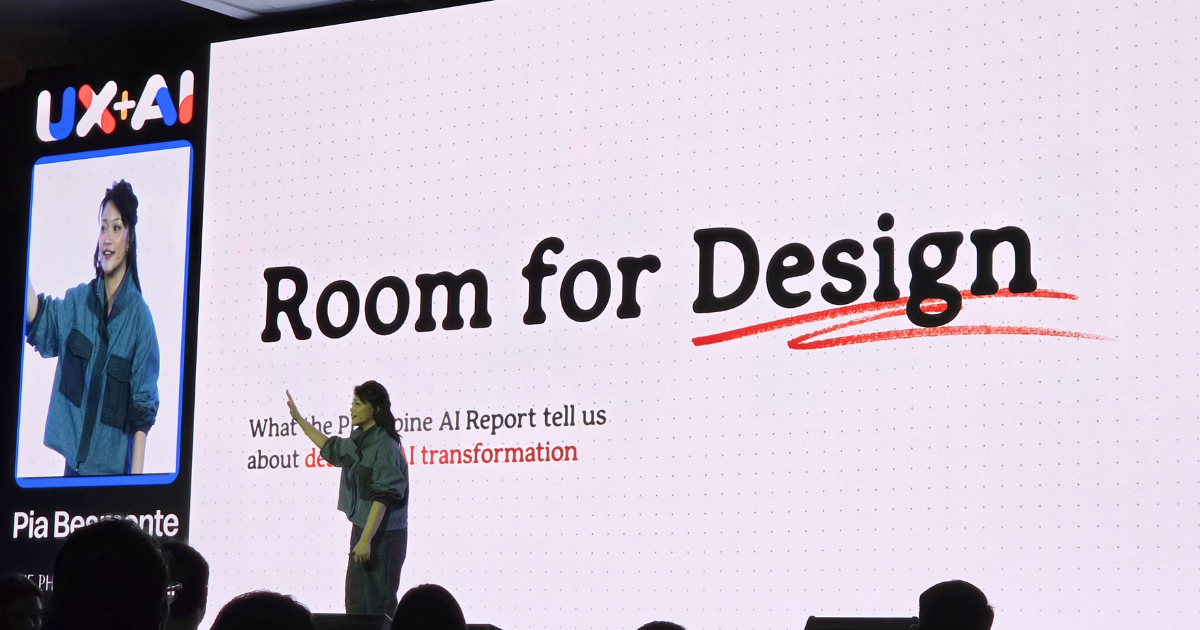
Pia Besmonte of Swarm brought data from The 2025 Philippine AI Report. Swarm surveyed 175 Philippine organizations across 47 questions on how AI is being adopted day to day. More than half had been using generative AI at work for over a year. Around two-thirds were using it for content, copy, and design. Many were paying for their own tools, ahead of their employers.
The figure she wanted the room to remember was seven. Of 66 organizations hiring for new AI roles, seven were hiring UX designers.
Her point was not that designers are being replaced. It was that they are absent from the conversations setting how AI gets adopted, which means those defaults are being written by engineers, marketers, and founders instead. If you are not in the room, someone else decides what "good" means for your users.
The context you carry is the part that does not transfer
Pia borrowed an idea from art history to make the case: provenance. The traceable history of where something came from. A model remixes what it was trained on, but it cannot pull from being a poet, a licensed teacher, and a Filipino designer at the same time, which is the specific combination she brings to a brief. Prompt a landing page and you get something that looks like every other prompted landing page. There are tells.
That echoed across the day. Albert described a civil engineer friend who turned his Claude Code instance into a dog that walks around his desktop, and said the idea would never have occurred to him, because he has spent a career learning that an icon is an icon. Beato Bongco of Anycase AI made the same case from the builder's side: domain experts still belong at the center, even when the machine handles the first draft. The most unexpected uses of these tools are coming from people without design and development habits to unlearn.
The panel discussions made the same argument more directly. Different disciplines and different histories produce ideas that a single trained pattern does not. Xinni Chng's line from her session was the sharpest compression of the day: "english is now a programming language". Anyone can describe what they want. What you have read, built, and lived through is what makes the description worth following.
Feedback is the data you do not already have
Bryl Lim, an AI engineer and founder of AppBuildersPH, built a budget tracking app called Tarsi over a weekend as a demo for a university talk. It reached number one in the finance category in four hours and number one across all categories in two days, with no paid marketing and no cloud bill, because everything runs on device.
What he did next is the part worth copying. Instead of answering the same questions in his inbox, he built a public community and let it become the roadmap. Feature priorities go to an in-app voting board. Bug reports collect device data, hand it to a coding agent, and arrive as a pull request he reviews.
His line, as Henri wrote it down:
"Customer feedback is the most important data you can have."
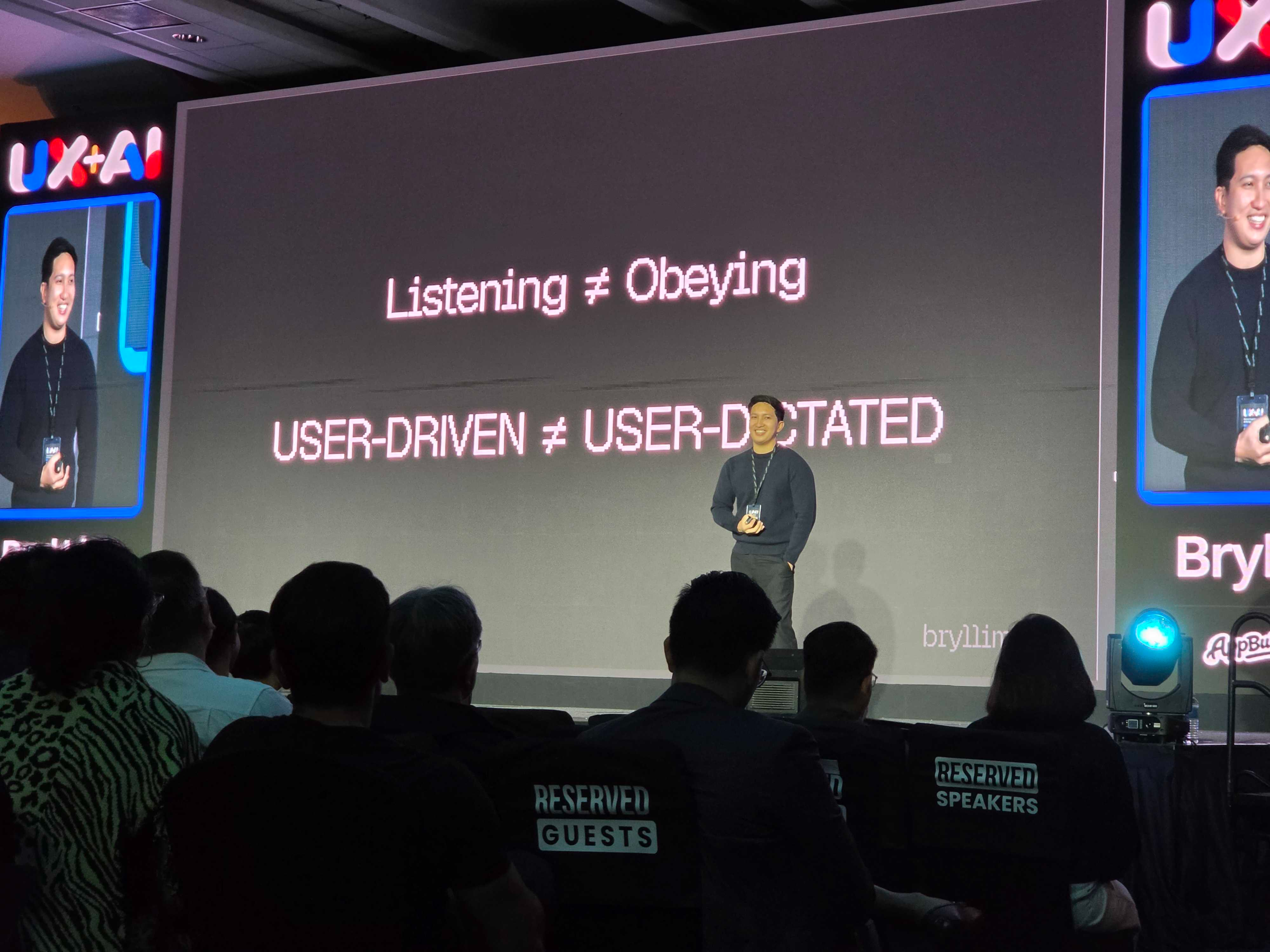
Then he drew the limit in the same breath. Enough users will eventually ask you to make the app free, and a founder who treats every request as an instruction ships that and ends the product. So the community sets the roadmap only where what people are asking for and what the app is for overlap.
User-driven is not user-dictated. Your users are the best source of what hurts, which parts confuse them, and what they would pay to stop doing by hand. None of that tells you what the product is. That part stays yours, and it is the thing you check every request against before it becomes a ticket.
The gap between the idea and your ability to build it is closing
Jason Chan, who built Poe at Quora, closed the day by asking who in the room had felt like an impostor, then raised his own hand. Twenty years in, after eBay, EA, and PlayStation, he still does. His framing was that the feeling is not a flaw but a symptom of standing slightly beyond your depth, and that what it actually measures is the gap between the idea in your head and your ability to execute it. AI does not remove the feeling. It shortens the gap, so the excuse of waiting for engineering capacity no longer holds.
Dan Carino, a member of design staff at OpenAI Deployment Company, gave the practical version. He lost his role at Meta earlier this year, had three months on a visa, and chose the harder pivot over the faster hire. His read on what got him there: readiness and access are two separate problems, and designers who move early into a new medium end up being the most experienced people in it, the same way the web in 1995 and the smartphone in 2008 rewarded the people who jumped before the playbook existed.
What we took away
Anyone can build now. That is genuinely new, and Henri's read on the day was that designers came away less worried than they arrived. The tools make it possible to solve problems that were never going to justify a team, a budget, and a quarter.
What separates useful output from what Albert called slop is not access to the tools. It is understanding the problem well enough to know when the output is wrong.
Every speaker agreed judgment and taste are now the scarce input. None of them had a repeatable way to build those things faster, and Albert said so plainly when someone asked how to imagine more: that one, he could not help with. The bottleneck is clear. The method for widening it is not.
That is a fair place for us to sit too. Our tagline, "agent run, human managed," is easy to put on a slide but hard to put to work, and the hard part is the piece everyone in that room now has to go figure out in their own context. Nobody is going to hand you the standard. If judgment is the scarce input, the work after a conference like this one is deciding what your bar is, writing it down somewhere your team and your tools can both read it, and holding to it when the volume makes that inconvenient.
Human Managed. Delegate notes by our UI/UX designer, Henri Villegas.